


Description
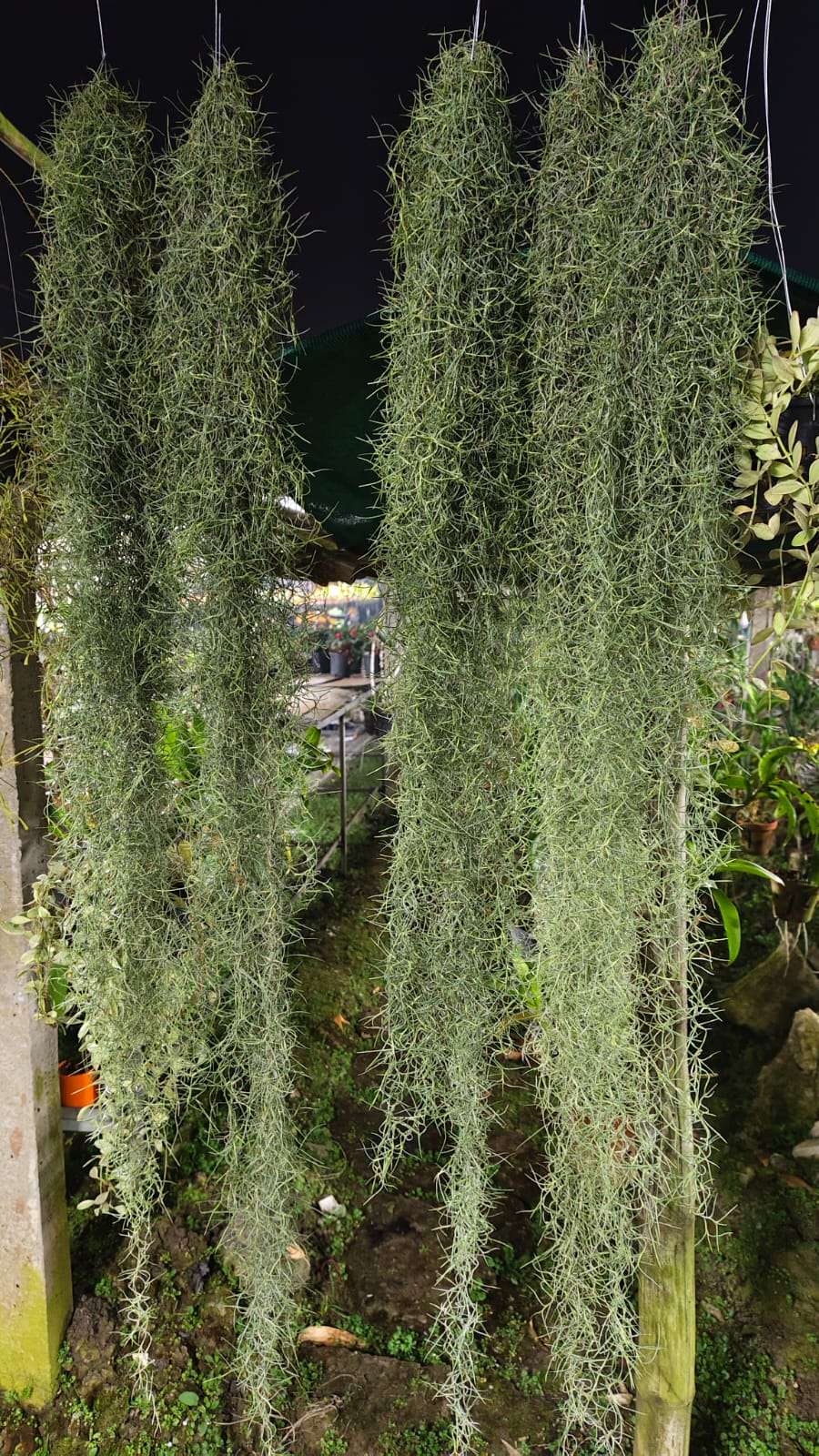
Spanish moss is a distinctive, epiphytic air plant known for its long, flowing, silvery-gray strands that drape gracefully from trees and structures. Despite its common name, it is neither a moss nor Spanish—it belongs to the Bromeliaceae family, the same family as Tillandsia air plants.
🌿 Botanical Information
-
Scientific name: Tillandsia usneoides
-
Common names: Spanish Moss, Old Man’s Beard, Tree Hair
-
Family: Bromeliaceae
-
Plant type: Epiphytic air plant (non-parasitic)
-
Native range: Southeastern United States, Central & South America, Caribbean
🌱 Plant Structure & Appearance
-
Long, thin, thread-like stems forming hanging chains that can reach up to 3–6 meters (10–20 feet) in the wild
-
Covered with dense silvery trichomes (tiny scales) that absorb moisture and nutrients from air and rain
-
Leaves are narrow, curved, and overlapping, giving a soft, fuzzy appearance
-
Grows without soil; attaches itself to tree bark, wires, or supports for anchorage only
🌼 Flowers
-
Small, delicate yellow-green flowers
-
Bloom sporadically, usually in warm seasons
-
Mild, pleasant fragrance, often noticeable in the evening
🌞 Light Requirements
-
Bright, filtered light to partial shade
-
Avoid harsh, direct midday sun which can scorch the plant
-
Ideal under trees, shaded balconies, or near bright windows indoors
💧 Water & Humidity
-
Prefers high humidity
-
Water 2–4 times per week by misting or soaking (depending on climate)
-
In hot or dry climates, frequent misting is essential
-
Must dry quickly after watering to prevent rot
🌡 Temperature
-
Optimal range: 15–30°C (59–86°F)
-
Can tolerate short cold spells but prefers warm, airy environments
-
Not frost-hardy for prolonged periods
🌬 Air Circulation
-
Excellent air movement is critical
-
Thrives in open, breezy locations
-
Poor airflow can cause browning or fungal issues
🌿 Growth Habit
-
Slow to moderate growth
-
Multiplies naturally by fragmentation—broken strands continue growing
-
Long-lived when conditions are right
🌍 Uses & Importance
-
Ornamental décor for gardens, patios, vertical displays, and terrariums
-
Provides habitat and nesting material for birds and insects
-
Historically used for stuffing mattresses, upholstery, and crafts
-
Acts as an indicator of good air quality
⚠️ Additional Notes
-
Completely non-parasitic—does not harm host trees
-
Should not be confused with lichens or true mosses
-
Avoid placing near heavy pollution or indoor stagnant air
Spanish moss adds a dramatic, ethereal beauty to any setting and is especially prized for its low-maintenance nature and unique cascading form. If you want, I can also provide a short description, care guide, or nursery-style listing text.

 Air plants
Reviews
There are no reviews yet.