

Description
Coryanthes macrocorys (sometimes the name you gave appears as Coryanthes Mocracanth in trade or misspellings—but the accepted orchid name is Coryanthes macrocorys Rolfe).
🌿 Coryanthes macrocorys — Bucket Orchid / Large Helmet Coryanthes
📌 Scientific Classification
-
Genus: Coryanthes
-
Species: macrocorys Rolfe (1892)
This species belongs to the Bucket Orchids (Coryanthes), a group of epiphytic orchids famed for their highly specialized flowers and remarkable pollination biology involving male euglossine bees.
📏 Plant Size (Mature, Blooming Specimen)
-
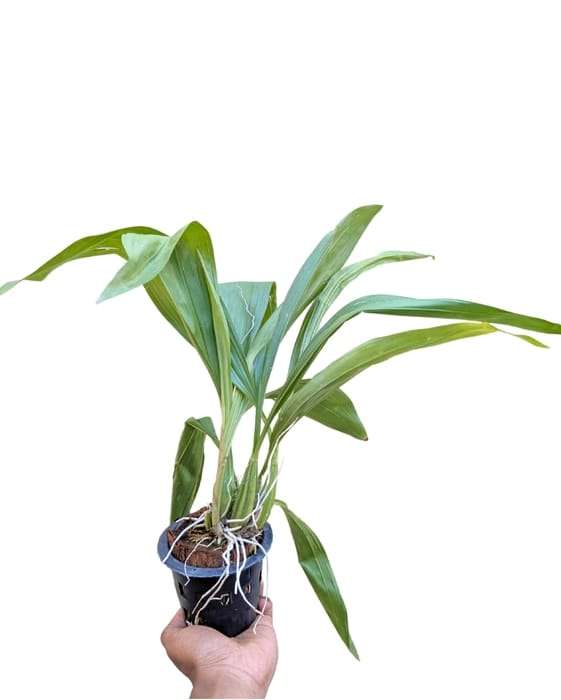
Overall plant height (mature): Typically about 46–63 cm from base to top of leaves/pseudobulbs.
-
Leaves: Elliptic‐lanceolate leaves growing to 6–53 cm long on each growth.
-
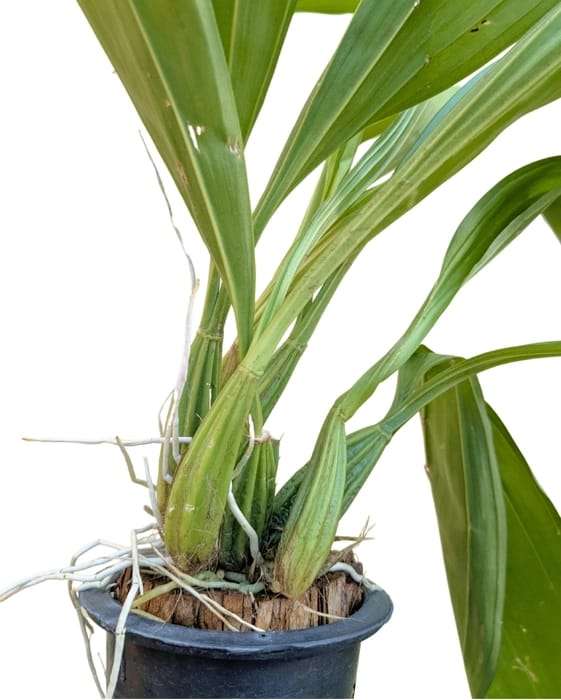
Pseudobulbs: Ribbed, conical, contributing to plant height and storage.
Note: In cultivation and ideal situations, large clusters of pseudobulbs can push overall canopy width wider, especially on ant gardens or mounts.
🌸 Bloom Characteristics
-
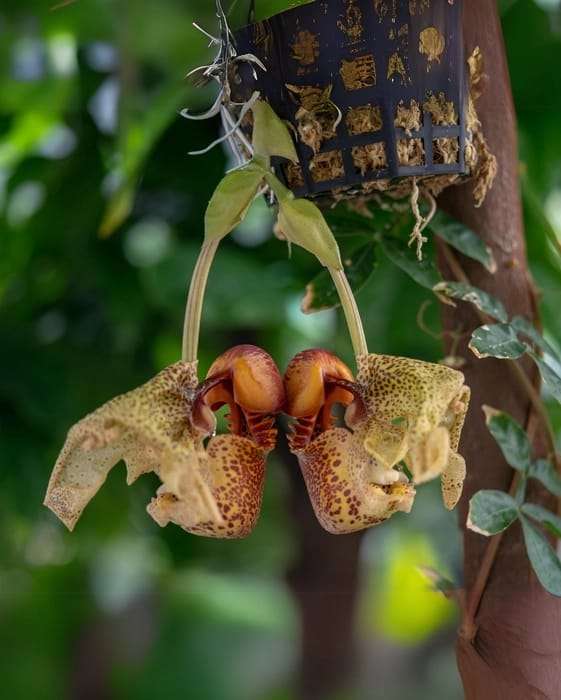
Flowering type: Pendant inflorescence emerging from the base of mature pseudobulbs.
-
Flower count: 1–2 flowers per inflorescence (rarely more).
-
Flower size: Large, showy blooms often ~7.5–12 cm (3–4.7 inches) across.
-
Inflorescence length: Often pendulous and can reach ~30 cm long.
Appearance & Features
-
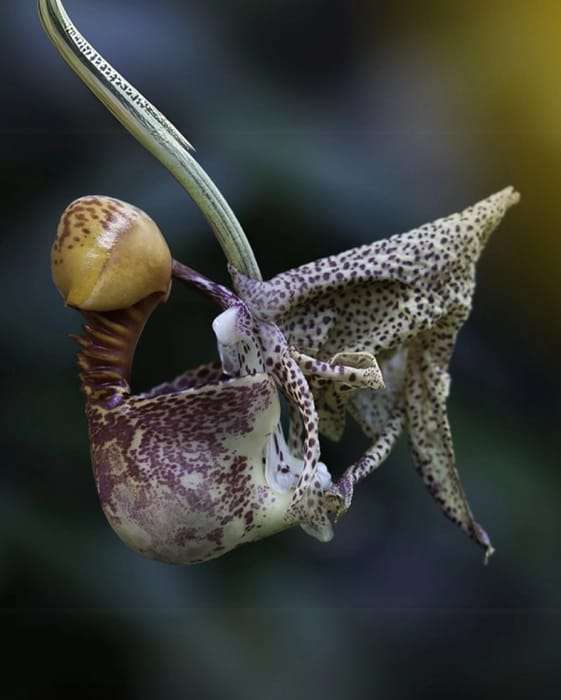
Flowers feature a complex “bucket-shaped lip” — the classic trait giving the genus its common name.
-
Flowers are waxy, varied in color (browns, reds, yellows) and highly fragrant in many cases.
🌍 Natural Habitat & Distribution
-
Native to: Tropical forests of Peru, especially Amazonian regions and montane zones.
-
Growth habit: Epiphytic — grows naturally on trees and within ant gardens (mutualistic associations with arboreal ants), which help nutrition and support.
🍯 Pollination & Biology
Coryanthes species, including macrocorys, have extremely specialized pollination involving male euglossine bees (tribe Euglossini). The bees are attracted to floral scents and oils, fall into the bucket structure, then escape by a passage that picks up and transfers pollinia.
This co-evolved mechanism is one of the most intricate pollination systems known in orchids.
🌱 Growth & Cultivation Notes
-
Prefers warm, humid conditions similar to native tropical forests.
-
Likes mounts or baskets allowing hanging inflorescences to drop freely.
-
Requires excellent airflow, regular watering in warm periods, and moderately bright light but not direct harsh sun.
📊 Summary (Mature & Blooming)
| Feature | Typical Size / Description |
|---|---|
| Plant Height | ~46–63 cm (mature) |
| Leaf Length | ~6–53 cm |
| Inflorescence | Pendulous, up to ~30 cm |
| Flower Size | ~7.5–12 cm across |
| Flower Count | Usually 1–2 per spike |
| Native Habitat | Tropical Peru epiphyte |
If you want, I can also give you care requirements (light, water, humidity), feeding schedule, and potting media recommendations tailored to this species.

Reviews
There are no reviews yet.